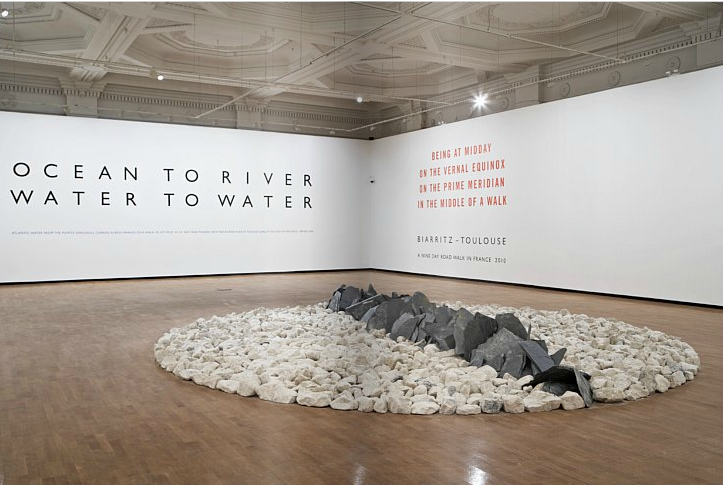
Richard Long exhibition

There's a new Richard Long exhibition at the Haunch of Venison in London.
I am in London next week and will make time to go and see it. Seen Richard Long's work in a range of locations over the years: from the Guggenheim in Bilbao to the foyer of DEFRA on Millbank, and various other places...
An artist who very much connects with the landscape.
I used a set of Richard Long postcards as a resource for a literacy exercise, and the way that his works link with mapping is also wonderful.
Last exhibition I saw was 'Heaven and Earth' at Tate Britain in 2009, so I am overdue some more Long work....

Comments

Popular posts from this blog

Ideal scenery

Check out this Robert MacFarlane tweet, and the replies that follow for a whole host of ideas on different people's ideal landscapes... Some wonderful images and brief descriptions ideal for sharing... "Tramlines and slagheaps, pieces of machinery, That was, and still is, my ideal scenery." WH Auden Question: what is your "ideal scenery"? pic.twitter.com/8QLS0HRZt9 — Robert Macfarlane (@RobGMacfarlane) July 6, 2017

Glacier Melt Visualisation

This nice interactive infographic visualises the ice loss from Switzerland's glaciers. It is one of several from the VisQuill site , developed by Dr. Benjamin Niedermann.

The path more travelled

I'm currently reading Nicholas Crane's new book on the history of Britain's footpaths: how they came about originally following the drowning of Doggerland , and were then refined by successive waves of change: horses, the Roman invasion etc. It's a dense and scholarly work, with plenty of points of interest and relevance to geographers exploring the connections between people and the landscape. He's taking his book on the road in a series of talks, with three confirmed so far. Here's the description for his talk at Stanford's book shop at the end of the month . He's also speaking in Exeter and Stamford. Walking is a cornerstone of British identity and the most popular form of exercise in the UK. But how much do we know about the paths that we walk? What is their history? Why do they follow the routes that they do? Are they permanent? Can we designate more of them?​ The Path More Travelled is a coast-to-coast history of footpaths from the stone age paths...