
Oliver Rackham

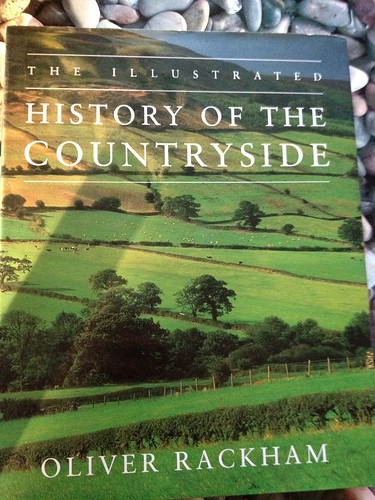
I've been creating a GeoLibrary this year, with 365 books to be placed on the virtual shelves of the library. Quite a few of them are related to landscape, which is not surprising given my interests. One book that I have just added to the shelves is an important one for anyone teaching about the landscape (which should be everyone of course)

This is a classic book, and has been published in a number of different editions over the years.
It was written in the 1980s.
It explains how the British countryside came about, through a range of processes which in some cases date back hundreds (or even thousands) of years.

This edition is an illustrated version / adaptation which adds some really useful extra images to the text.
The book is framed around a series of walks, which take the walker through some of the processes which shaped the landscape. One of them is at Holme-next-the-Sea in Norfolk, and I have walked that route many times.

There is plenty here on vernacular geography and how it has shaped many of the distinctive areas of the UK.
Comments

Popular posts from this blog

Explore the world with the Go Jetters

Really useful post and resource for those teaching Primary Geography . A new set of characters called the Go Jetters who teach young people about key geographical ideas. Geography helps children to make sense of their world. Very young children are naturally curious, and they love to actively explore the world around them, noticing all kinds of detail. That’s why they need to develop geographical vocabulary like the names of places, people and things, and the words needed to describe and locate them. It helps to think of children as little geographers – they each have their own world of private geographies  - the places they name for themselves with meanings that only they understand: the dens where they hide out with their friends, special meeting places in the school playground. Whether they’re playing in the back garden, or splashing through a muddy puddle on the way to school, children are intrepid explorers making new (to them) discoveries about the world every sing...

Edward Storey - Fenland chronicler and poet

I have worked in the Fenland city of Ely for the last six years - commuting in all weathers and at all times through the Norfolk and Cambridgeshire Fens... Edward Storey has died at the age of 88. He was a chronicler of the Fens: an author and poet. There was a lovely piece on Edward on BBC Radio Norfolk that I heard yesterday on the way home, which described him as 'a poet of place'. You walk the roof of the world here. Only the clouds are higher And they are not permanent. Trees are too distant for the wind to reach And mountains hide below the horizon. The wind labours through reed As though they were the final barrier. Houses and farms cling like crustations To the black hull of the earth. Here, you must walk with yourself, Or share the spirits of forgotten ages. Keith Skipper has written a lovely piece in the EDP. More to come on Edward in a future blog post.... Image: Alan Parkinson - Fens near Manea - CC licensed

Landscape in a Box - more student examples

Thanks to Jack Marsh for sending me some examples of 'landscapes in a box '. Landscapes in a box is one of the ideas that seems to have gone down the best of the things that I've shared over the years. The basic idea is to create a landscape within a box, perhaps a burger box (but could also be a shoe box) This was featured in 'Teaching Geography' in 2009. Jack used the activity with his groups, and has sent me three excellent images of contrasting images from the students: an Antarctic scene, New York's Central Park, and Paris... Outstanding work !! If you've used Landscape in a Box, why not share your students' work too...