The Cape Farewell voyages aim to bring a cultural response to the issue of Climate Change.
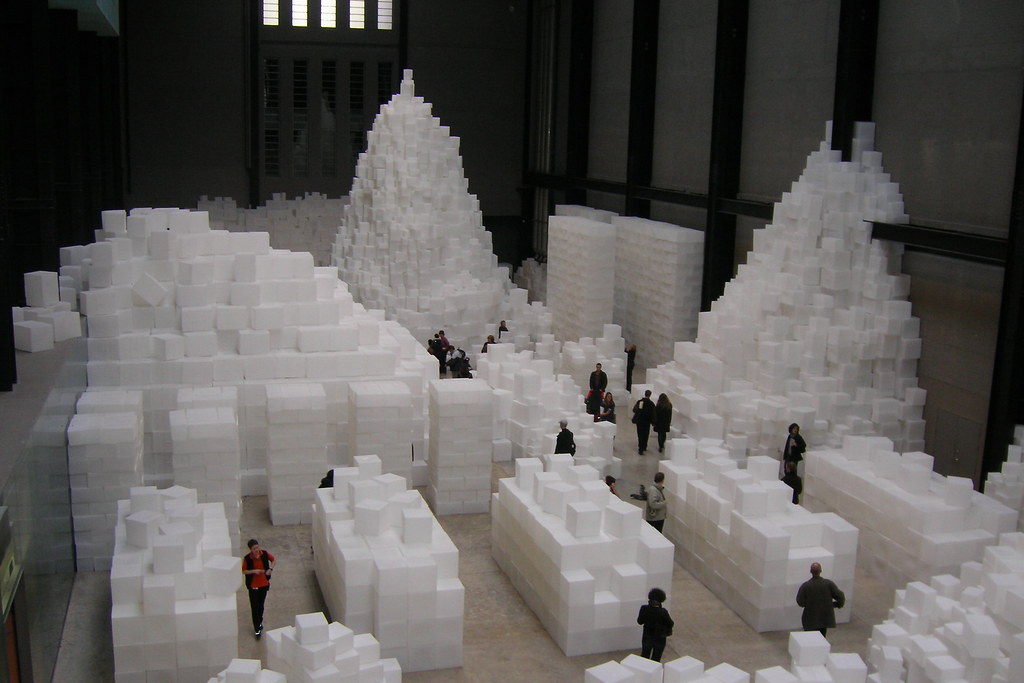
Previous voyages involved Anthony Gormley, and Rachel Whiteread, who was inspired to fill the turbine hall at Tate Modern with white cubes.

When teaching the now sadly ex-Pilot GCSE Geography course a few years back, I used the Cape Farewell pack that the Geographical Association produced.
The blog posts that relate to my studies of this EXTREME ENVIRONMENT are available by following THIS LINK to the blog: you'll see student work and a range of other resources which I hope you might still find useful...
There was plenty on the nature of the POLAR LANDSCAPE and the impact of landscape change due to climate change... and the impact of GLACIATION.

The latest Cape Farewell expedition is going to follow the route shown on the map above, and it has JUST SET OFF... you can follow if for the next few weeks by visiting the CAPE FAREWELL WEBSITE, or following CAPE FAREWELL on TWITTER.
Previous voyages involved Anthony Gormley, and Rachel Whiteread, who was inspired to fill the turbine hall at Tate Modern with white cubes.
When teaching the now sadly ex-Pilot GCSE Geography course a few years back, I used the Cape Farewell pack that the Geographical Association produced.
The blog posts that relate to my studies of this EXTREME ENVIRONMENT are available by following THIS LINK to the blog: you'll see student work and a range of other resources which I hope you might still find useful...
There was plenty on the nature of the POLAR LANDSCAPE and the impact of landscape change due to climate change... and the impact of GLACIATION.

The latest Cape Farewell expedition is going to follow the route shown on the map above, and it has JUST SET OFF... you can follow if for the next few weeks by visiting the CAPE FAREWELL WEBSITE, or following CAPE FAREWELL on TWITTER.
Comments